10 November 2019

Nine

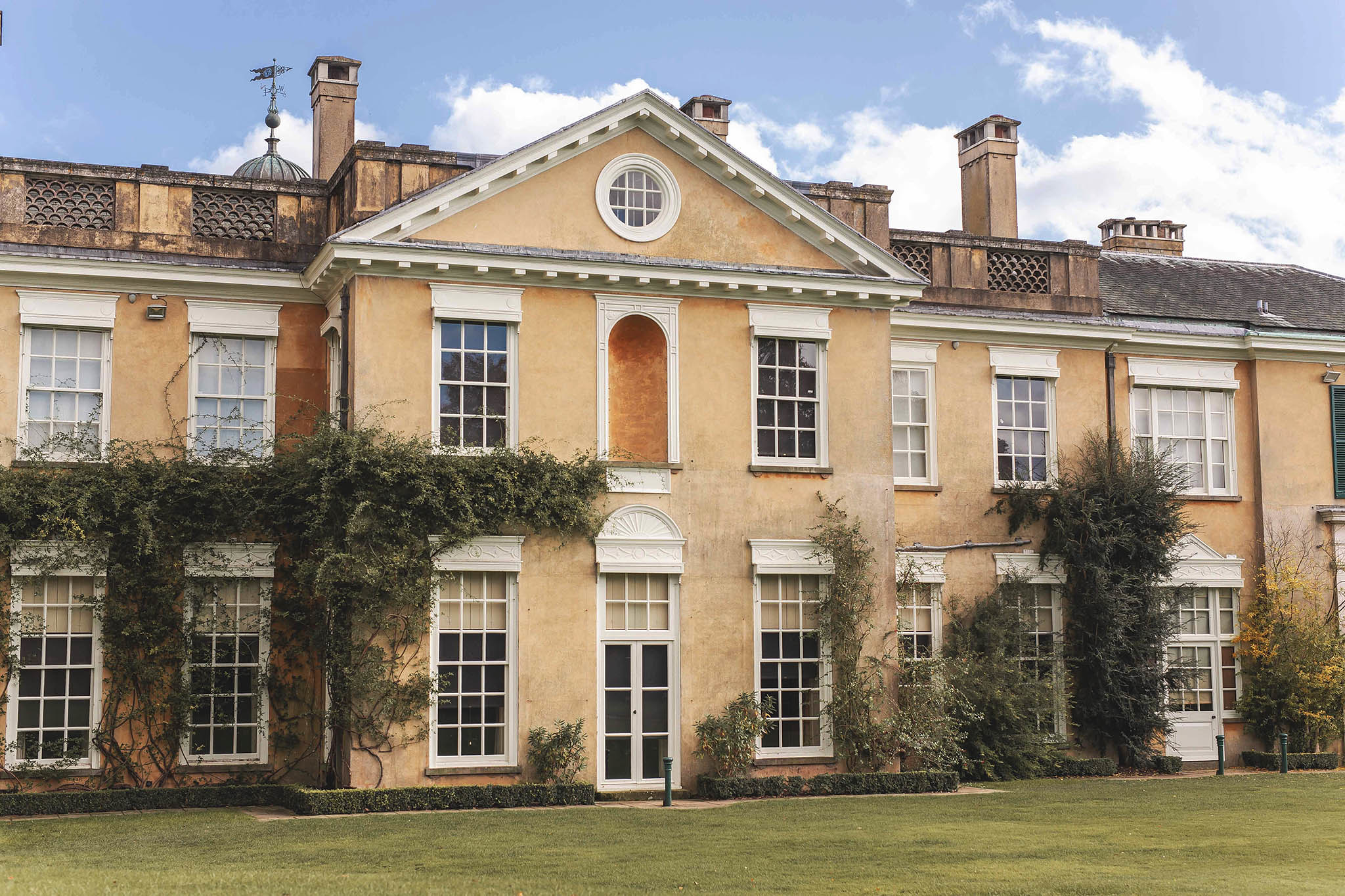
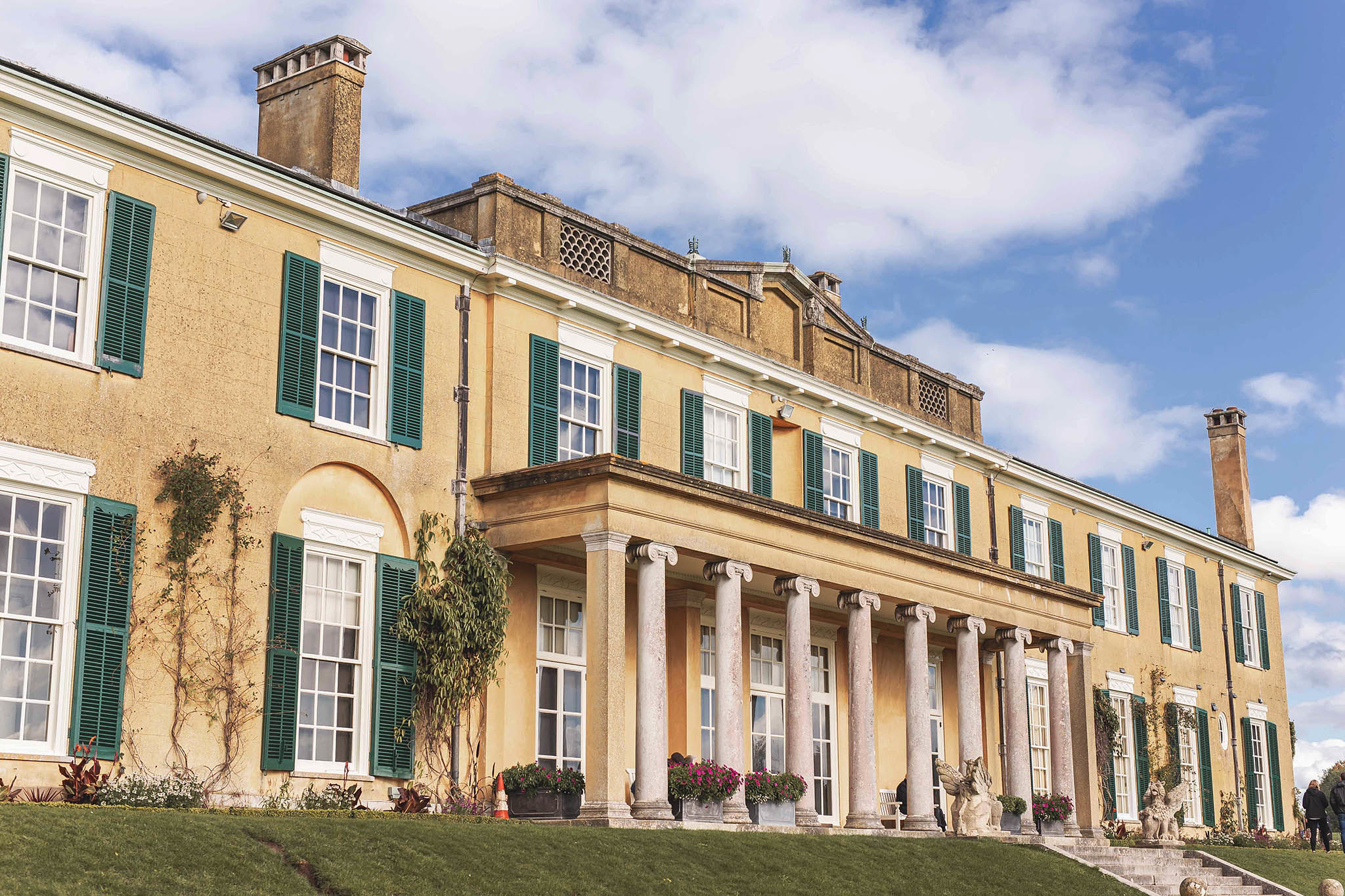
Polesden Lacey

And just like that, we arrive nine years later. When I first posted to this blog in November 2010, it began as a little something to complement my journalism degree, to produce my name in Google searches, and to explore my love for street style photography - as featured in my then-favourite blog, The Sartorialist. I'm very proud of how far I've come since then, from teaching myself photography to realising a sense of self-confidence I wouldn't have imagined at the age of eighteen.

But I must confess, I haven't been the most dedicated blogger since leaving university. I'd say my blog peaked in the spring of 2015, when I visited Paris Fashion Week for a second time and took my favourite photos to date. Later that year I moved to London and my focus shifted to enjoying other aspects of life. And while I should never disparage myself for wanting a more genuine social life outside press events (there is only so much small talk and canapés a person can live on), or for focusing on a separate full-time career, I wish I had worked harder to find a balance that didn't leave me feeling guilty about posting infrequently, or feeling lost in the expanding bubble of social media.

My favourite period of blogging was definitely the earlier years, circa 2012, when I had an astonishing amount of free time to potter about with my camera, and a steady stream of event invitations and review opportunities to supplement my street style content. But there was considerably less pressure to be an "influencer", and for many bloggers, our individual online platforms were just a hobby. Instagram was in its formative years, and there wasn't the same emphasis as today to make it big on social media; the quality of our original content was the greatest indicator of our talent, not the number of followers we had. Blogger meets, too, were predominantly social events, where we would make new friends over a burger or a drink (a chilli-flavoured vodka shot in the case of Paige and I), then take each other's pictures in cute alleyways. I can't help but wonder, are blogger meets even a thing any more?

Polesden Lacey Polesden Lacey Polesden Lacey

Indeed much has changed since. Blogging has become a competitive industry, in which many of the individuals I befriended all those years ago now enjoy a full-time position creating content for the same websites they would post their musings and outfits-of-the-day. I can't deny I'm jealous at times; I plateaued some years ago at seven-hundred-and-something Instagram followers, and if I want to stay in this game, which I do, that figure simply doesn't reflect a blogger of nine years' experience. I'm having to accept that quantity is equally as important as quality, if not on my blog then certainly on my social channels, which serve as the face for the main product.

Because truthfully, I do miss the press invitations and review opportunities, even if my time is more constrained these days. There was a lifestyle I relished from being an active blogger, and it provided me with so much to shoot and to write about. The content that has continued successfully are my London Fashion Week features, as a consequence of having attended every season for seventeen seasons. Nevertheless I don't what that to be what this blog is only about, especially when you can see runway looks from hundreds of other media sources. (On a more personal level, London Fashion Week has lost its magic, and I'm contemplating whether I even attend next year.) I know I can write well and I know I can take great photos, but clearly what I've been lacking is motivation and - more importantly - direction.

Hence going forward, my new objective - unsurprisingly - is to achieve a more substantial readership and social following by my blog's tenth anniversary. Ten-thousand Instagram followers for ten years has a nice ring to it, but realistically, I'd be chuffed to reach one-thousand, provided I apply myself and post content that you, my readers, find the most engaging. I'm hesistant to say what that might be, because having written similar thoughts before, I know I tend to be overly ambitious and promise content I never get around to creating - YouTube series, say what? Yet if all goes swimmingly, I should like to post more about food, drink and travel, further explore my love for drag artistry, and hopefully I'll even find the time to return to street style photography.

In the meantime, I would like to thank my friends for supporting me and occasionally taking my picture where required (I may be asking more often from hereon), my mum for continually reminding me not to stress so much over a website that didn't make me any money (I often didn't listen, but she was always right), and every person who has read even one of my blog posts for making these past nine years all the worthwhile. Here's to one more, certainly not the last.

Polesden Lacey

Photos taken at Polesden Lacey, Surrey, by Paige Joanna Watts

8 June 2019

Thundry Hills Gin

Thundry Hills Gin

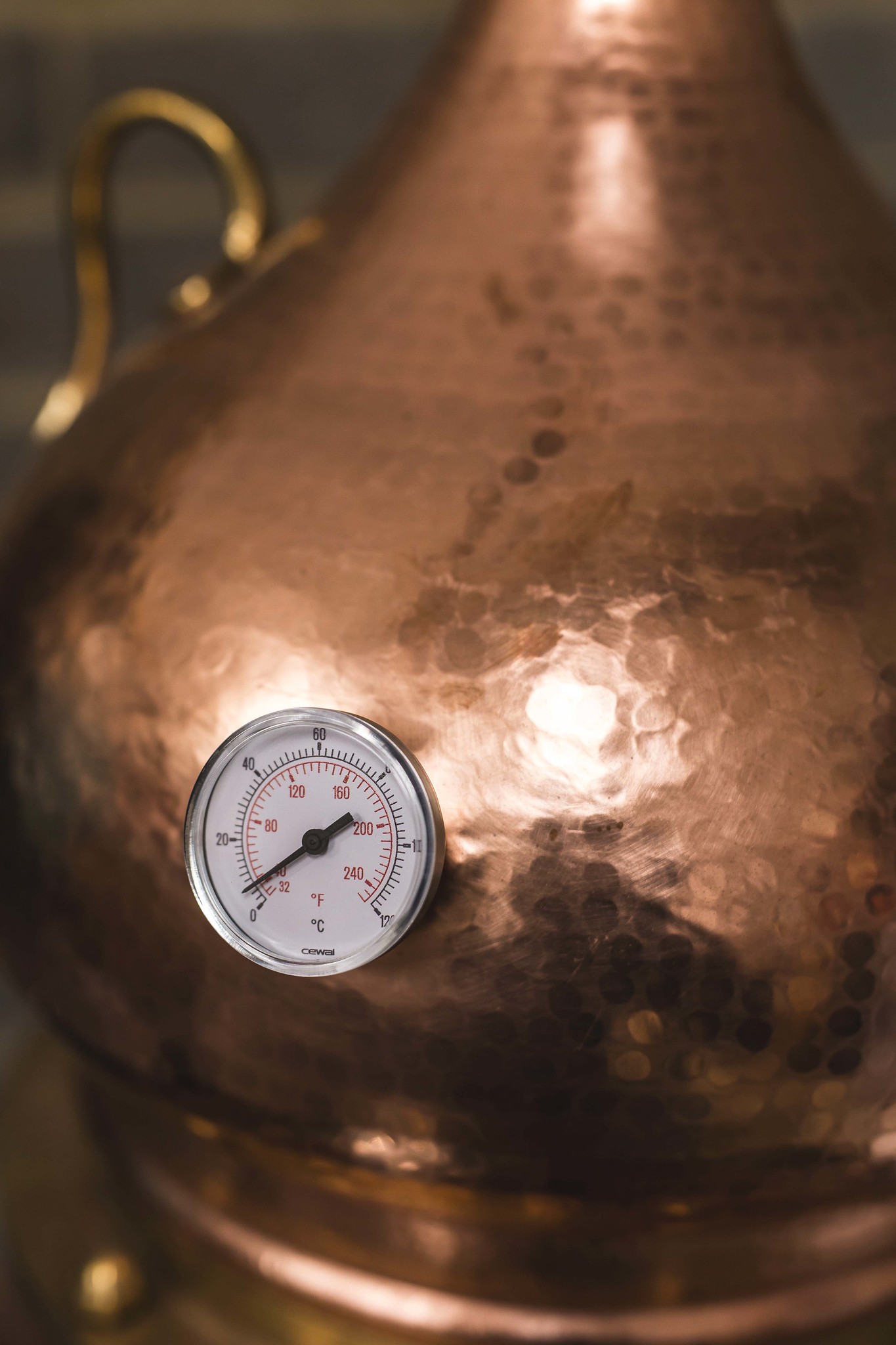
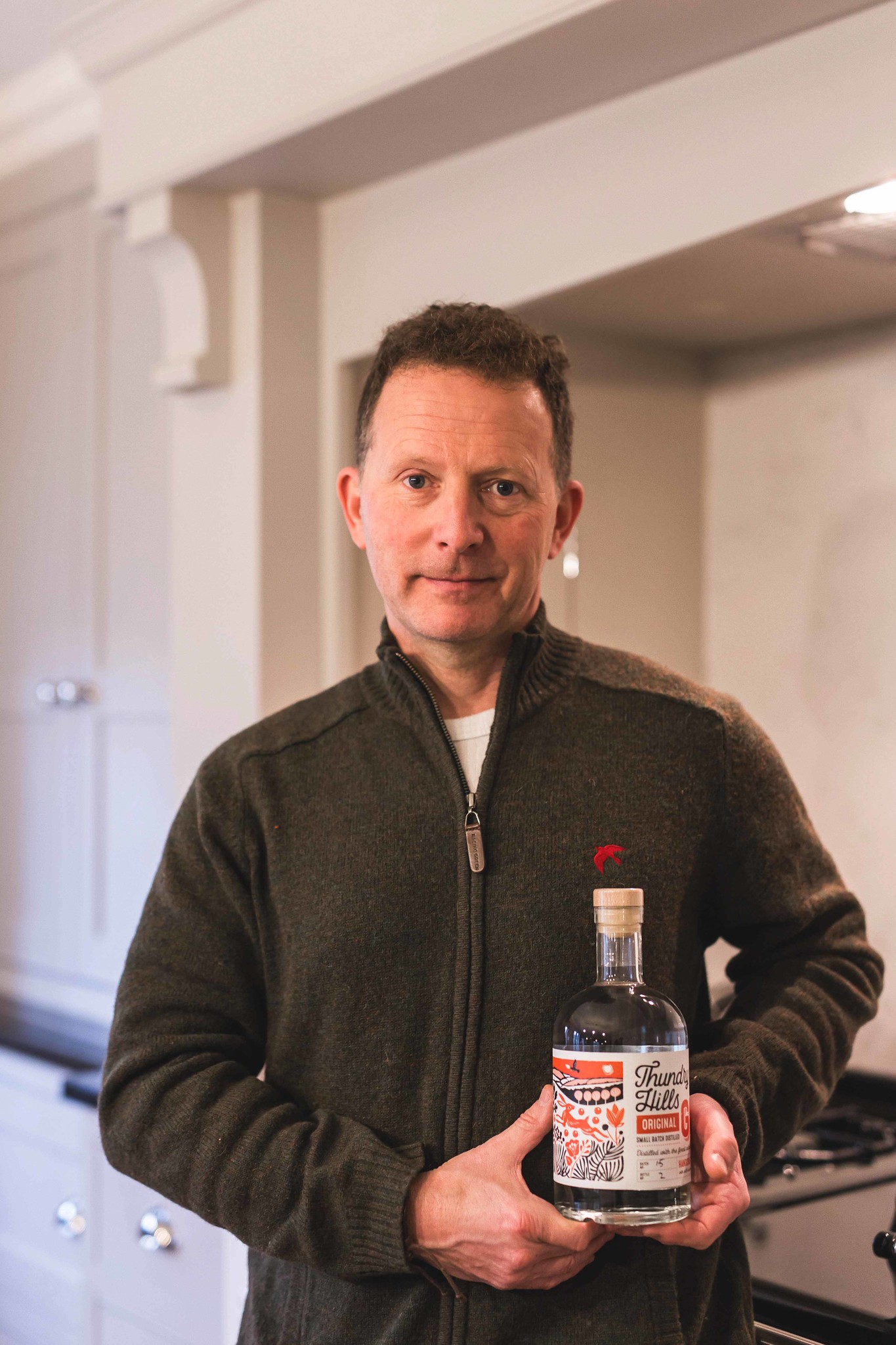
Not far west of Godalming, I pass through the historic village of Elstead and cross the River Wey to meet Neil Redit, Head Distiller and Co-director of Elstead Village Distillers. Escaping the drizzly weather, our setting for the interview is a cottage in the midst of renovation, sited on the five-hundred year old Thundry Farm. The distillery is located here too, quite literally around the corner, in a converted stable block.

"I moved into the cottage three years ago and it was in pretty bad condition," begins Neil, "It was falling to bits everywhere. So I was doing it up as I could afford it, and in the meantime I was helping Paul and Christine Shubrook, who own the farm. They were very grateful and wanted to contribute."

Neil explains he declined monetary contributions to assist with the renovations, so Paul and Christine instead bought him shares in the local cider company, whose director informed them they were exploring the idea of producing their own gin, having about Neil's interest in the process. Months later, however, little progress had been made at the cider company, so Neil and Paul teamed up to make their own spirit.

"Paul and I went on a gin experience to the City of London Distillers," Neil continues. "We made a couple of gins, brought them home, gave them to people, and people liked them. We then ordered some more gin, because they make it to your recipe. We handed them out and around to lots of different people, and everyone said they were really lovely. So we thought, hmmm, maybe we've got something here. We went to a gin festival in London's Tobacco Dock, tried lots of different gins and thought ours isn't too bad, we don't think. And we decided to go for it."

Thundry Hills Gin

Neil and Paul set up the company in August 2017, initially under the name of Surrey Hills Gin, which seemed fitting considering their charming location. But a last-minute trademark dispute with the agent of a well-known gin company saw the pair having to rebrand their product in the final four days before their official launch.

"That meant we had to ditch around £3,000 worth of merchandise and labels," says Neil. "All the stops were pulled out, because we were launching. Our designer worked overnight and through the weekend to get our new labels sorted. We decided to call it Thundry Hills Gin, which I think is actually better, and we launched in February of last year, once all the licensing and everything were in place."

"And that's how we've been going," he continues. "We have two forty-litre stills, we produce about fifty bottles at a time. We bottle, label, brand and seal every single bottle here at the farm. And we hand deliver everything. I think we're in about forty to fifty pubs, and probably eight to nine retail outlets. Mainly local, but there are some anomalies – there's a pub in the city of York that's got it."

Thundry Hills Gin

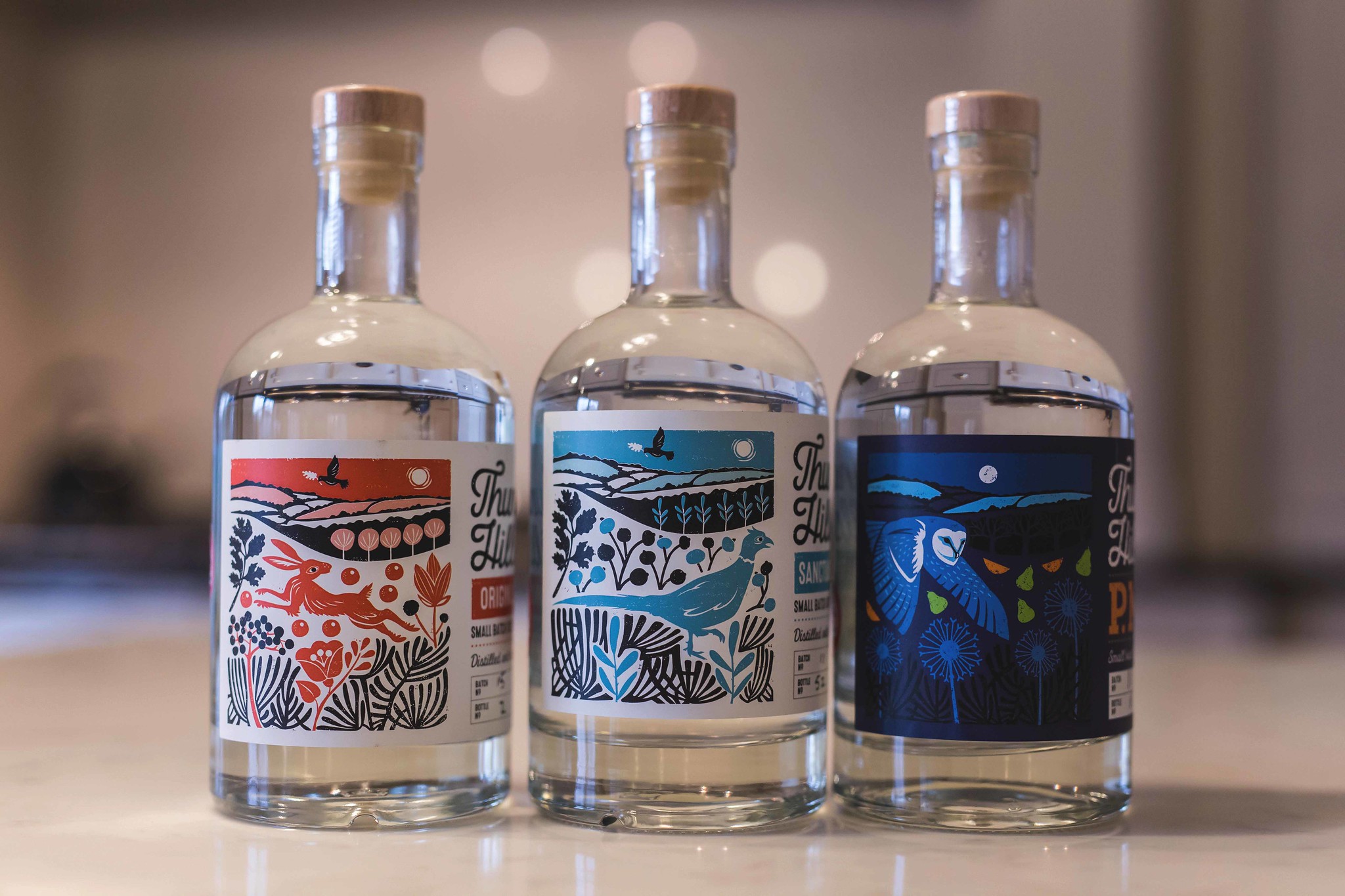
Thundry Hills fits the description of small-batch gin, but that doesn't mean Neil and Paul's aspirations are small too. The duo launched the company with not one, but two gins, which are the base recipes they formulated in London, and have since produced a third for their permanent collection, plus a fourth seasonal edition. Each gin comes in a clear bottle with a distinctive, colour-coded label featuring the batch and bottle numbers, Elstead Village Distillers logo, and artwork of the local wildlife.

Sanctuary Gin is Neil's recipe, dressed in a white and light blue label with a pheasant graphic. Neil reveals the name and choice of animal were inspired by Thundry Meadow accross the road, which is a bird sanctuary. "The gin itself is more of a traditional gin," he explains. "It's 43% ABV, it's very high in juniper and it's got a little twist of black pepper in it. So it tends to hark back to the old fashioned gins of yesteryear. Because the juniper content is very high, and juniper can be very citrussy and quite warming, you get lemony flavours. I like it just with plain tonic; it doesn't have to be a fancy tonic, as long as it's a reasonable quality. I normally go for a low sugar tonic as well - I don't mind the alcohol, just the sugar!"

Wrapped in a white and red label with a hare motif, Original Gin is Paul's recipe, although the name is misnomer in that both Original and Sanctuary editions were conceived and launched at the same time. The intended name was to be Thundry Gin, but having changed the name of the whole range to Thundry Hills Gin, Paul's recipe was renamed Original. "We couldn't have Thundry Hills Thundry Gin," Neil clairifies. "So that's why it's swapped around, but what's in a name, eh?"

"Original has less juniper, caraway seed, and a very small amount of sweet orange peel that goes in the still with it, just to give it a slightly different edge than Sanctuary. It's smooth, I like it neat over ice, or again with a plain tonic. We've done cocktails with Original, because it lends itself quite nicely. We have one with Cointreau and another with Creme de Melon, and we did those last summer."

Thundry Hills Gin

The third edition is called PM Gin, which stands for pear and mango, and whose name inspired a dark blue label featuring a barn owl. Although intended as a seasonal summertime edition, its popularity encouraged Neil and Paul to continue its production indefinitely. Unusually for a fruit-based gin, the liquid is clear, and yet the the flavour is beautiful - certainly my favourite of the three - without the tartness or overpowering fruitiness you might get from certain commercial brands.

"We differ slightly from some distillers that produce fruit gin," Neil goes onto explain. "If you go into a supermarket and buy a fruit gin, it'll normally have a colour, it'll normally be pink or red or whatever. And that's because what they do is they produce a base gin, then they tip fruit juice into it. That sort of compounding or blending, we don't do any of that. Our gins are classed as London Dry, which as you probably know are done in one-shot distillation, so nothing is added afterwards except spring water. And our fruit gin is no different. Everything goes into the still, it's distilled in one go. The distillate is collected and watered down, and that's what we drink. That's why our PM Gin is crystal clear, it looks like water. And it has a very distinctive fruity flavour."

The fourth gin was produced specifically for Christmas last year, and features a cream-coloured label with a prancing deer. "We called it Michaelmas, and it was basically Christmas spices in a bottle," says Neil. "And it was quite popular, so we'll probably bring that out again next Christmas." Given all the gins are sold in 20cl bottles as well as the standard 70cl, there's no denying they would make an excellent stocking filler.

Thundry Hills Gin

Beyond the production, however, Neil is keen to explore more events, having already hosted customers at the farm on special open days, a gin tasting at The Woolpack in Elstead, and a supper evening at The Swan Inn in nearby Chiddingfold. There's even an interest in making a fruity sorbet from the PM Gin, the sound of which makes me salivate.

"Made from PM Gin, but I might have to put a bit of pear and mango with it," describes Neil. "If you have PM over ice in the garden, in the summertime, it's quite dangerous, because you turn around and find you've just sipped the lot, so you pour another one, and by evening you're completely whackered." Please drink responsiby, I think is the message there.

Going forward, Neil respects the main challenge is getting the name out - made all the harder when his time is also split between his full-time profession and refurbishing the cottage. Towards the end of our interview, we discussed the potential of social media; and indeed an image on Instagram can be influential in pushing sales, perhaps more so than my few words on this blog. But for small-batch distillers such as Neil and Paul, whose business runs on passion as much as profit, I believe true success lies in physically introducing the product to as many people as possible, then let the customers share the news of their new favourite tipples.

Therefore on this World Gin Day, I implore you all to explore your local gins as I have done. Try a sample, buy a bottle, and perhaps even recommend a couple to your friends and family. You'll be promoting an independent business, and you'll have a delicious something-something to sip on. It's as easy as that.

All three editions of Thundry Hills Gin are available to purchase through the Elstead Village Distillers website, or you can locate a bar in which to try it first. And since you're here, you can read my previous interviews with the equally independent Sandhills Distillery and Distillers of Surrey by clicking on their names.


Thundry Hills Gin

23 April 2019

Sandhills Gin

Sandhills Gin

The gin industry has expanded at astonishing speed since small-batch distilling was legalised a decade ago, during which time hundreds of enterprising individuals have eagerly set about producing their own spirits for commercial release. Of course, such creative freedom does harbour the risk that one's palate may be prejudiced by their own enthusiasm for the product, but sometimes these budding distillers surprise us with tantalising tipples worthy of a spot on our drinks trolley.

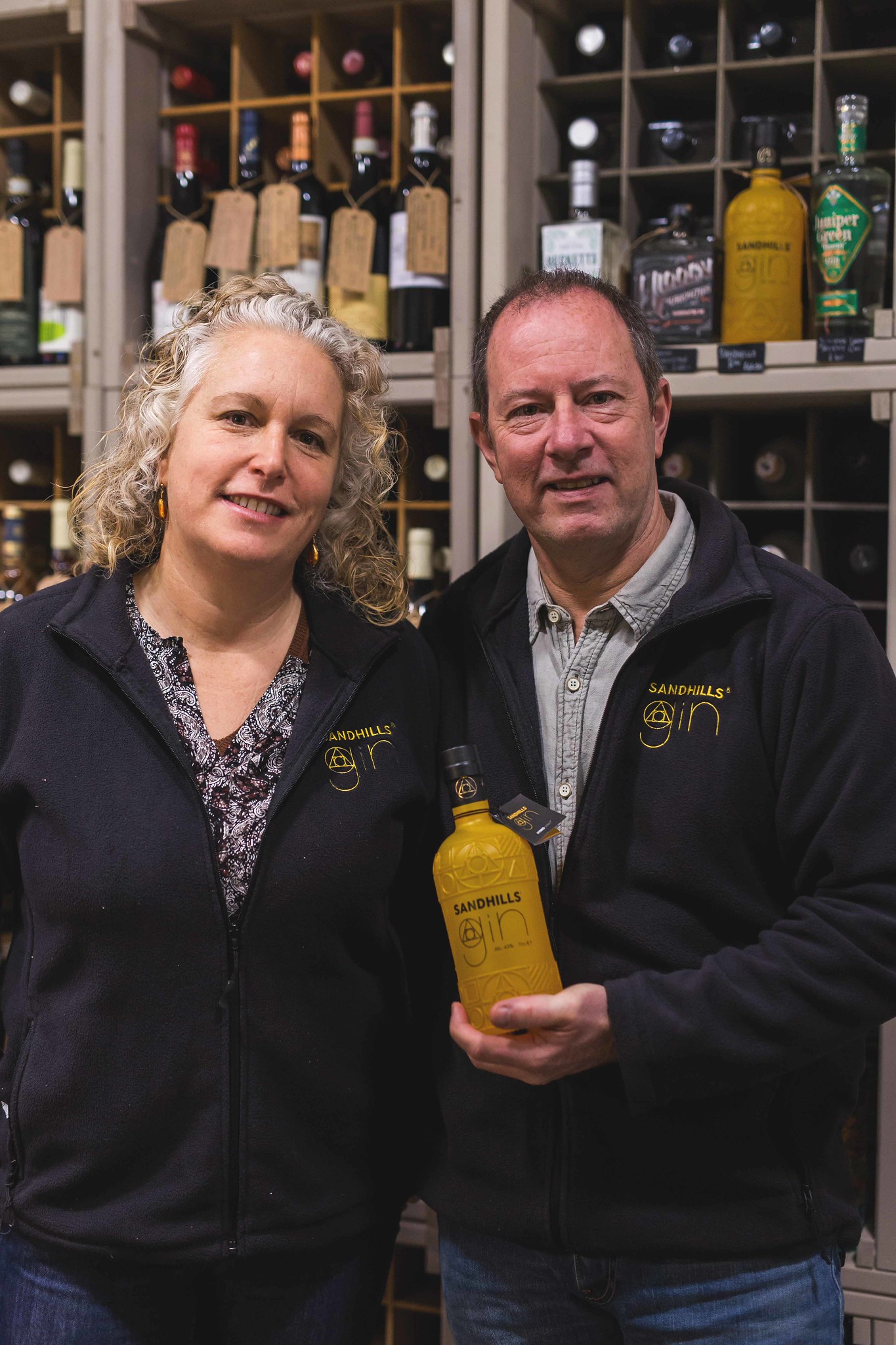
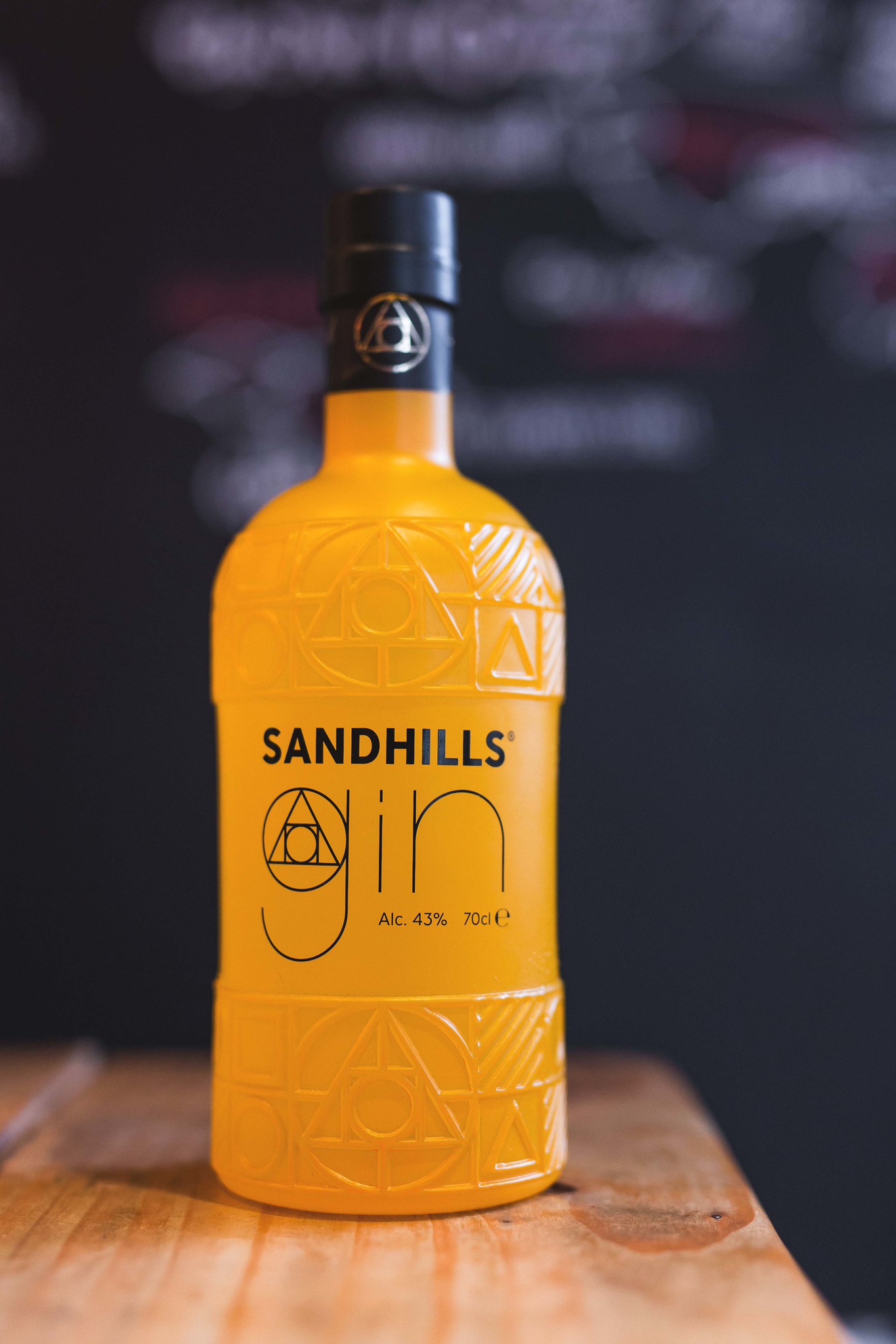
Among such company is Sandhills Distillery, who, having launched their namesake Sandhills Gin in December of last year, are Surrey's youngest offering to the gin community. While the lustrously yellow bottle steals your attention from across the bar, the impeccable pairing of citrus and spice ensures an enjoyable sip, and perhaps even a second round.

"The reality is the world doesn't need another gin," begins Tom Bird, co-founder of Sandhills Distillery alongside his wife, Jeanette, and their family friend, Brian. "For years we've loved gin, we drink gin and tonics quite happily at the start of an evening, and we've got about thirty gins on our gin shelf at home. But of those thirty, there are only three we'll buy again. So actually, even though you've got a market that has hundreds and hundreds of gins, a lot of them don't stand out."

Sandhills Gin

It's a grey and drizzly January morning, and I'm sat opposite Tom and Jeanette in the window of The Godalming Food Company, where they officially introduced their gin only a month prior. Other customers are ordering coffees from the counter, or perusing local produce from the shelves. Across the shop floor, a chalkboard sign identifies a "try before you buy" sample bar, comprising twenty different spirits clustered together on a wooden barrel. Sandhills Gin stands loudly and proudly at the front of the pack.

Tom explains to me the inspiration for wanting to make his own gin - a bar in Hong Kong that re-distills existing gins with alternative botanicals to create new and intriguing flavours. "I had one that was kaffir, lime and basil, and it was glorious," he says. "And so that opened my eyes to think, well, if that's what this bar is doing, we could experiment with gin. So I came home, we bought a little three litre copper pot just to play around with, and we started experimenting."

But after deciding on the criteria for their perfect gin (a juniper forward blend of citrus and spicy components), the trio's main challenge was ensuring the flavours of their chosen botanicals wouldn't be unduly lost in the sweltering distillation process. It's an understandable quandary - how often do you try a new gin, yet are unable to identify the botanicals listed on the label? As all sensible folk do, Sandhills Distillery turned to science for their solution.

Sandhills Gin

"Gin is done in a copper pot, as you probably know," explains Tom. "You've got a big copper pot, you put your alcohol in with your botanicals, and you heat that to about seventy-nine degrees. The alcohol evaporates and takes on the character of the botanicals, and then what condenses out is gin. And that is great for juniper and coriander, because the heavier oils in those botanicals need the heat to release them. But when you put in honey, lemon balm, yuzu, and some of these other botanicals that we wanted to use, that heat can begin to taint the flavour."

"So we got into something called a rotary evaporator," he continues, "which is a piece of science equipment. It essentially works in the same way as a copper pot, but what you do is you put the whole system under vacuum. And when you put liquid under vacuum, it reduces the boiling point. So instead of boiling alcohol at seventy-nine degrees, with the rotary evaporator, we can distill botanicals at thirty-seven degrees, and therefore you don't harm them. You keep the very nature of the flavours."

As I listen to Tom's explanation, I imagine this rotary evaporator as some kind of fancy space-age still with all manner of lights and buttons, however an image search following the interview presents what appears to be a oversized and overly complicated thermometer leaning over a slow cooker. Admittedly it doesn't have the same beauty of a gleaming copper still, nonetheless the method is a stroke of innovation in ensuring greater depth of flavour in a small-batch gin.

Sandhills Gin

Accordingly, it's the unique collaboration of traditional and modern distillation methods which has inspired Sandhills Distillery to adopt the symbol for alchemy into its branding. The symbol not only forms the loop in the letter "g" of "gin", but features also in the bottle's bizarre embossing. "Have you felt the bottle?" asks Jeanette, "I get over-excited, because it's very tactile." The bottle is translucent too, therefore it will glow when perched on a backlit bar.

The choice of yellow reflects two of the botanicals used in the recipe: honey and gorse flower, both sourced locally in the village of Sandhills. Likewise, Douglas Fir pine needles are harvested from Tom and Jeanette's own garden. Other ingredients are more far-flung, such as yuzu (an Asian citrus fruit), black cardamom and Tazmanian pepper berry. Altogether, the finished product reminds me of Thai food - bursting with flavour, led by refreshing citrus and warming spices. Sandhills Distillery recommend a zest of orange as a garnish.

"If you were drinking a gin and tonic because it's what you enjoy sipping," says Tom, "you're not drinking it to get drunk, you're not drinking five or six and evening, then what you really want is to be able to sip it and have an experience of different flavours - on the nose, on the palate - and that's what we try to craft."

Sandhills Gin

Even with an exceptional gin, I have to ask Tom and Jeanette if they were worried about launching their product in an already inundated market. Jeanette laughs nervously, "Worried? I think aware, in that we knew we needed to do something different. We haven't had the best of sleeps the last six months, but we were very sure of our brand and our story, and most importantly our gin. We're very proud of that."

"There's nothing out there that we've found with this hybrid distillation that's getting the fresh, pure flavour," she continues. "You've got to go in with your eyes open, but we feel we could be a strong presence in the market. We launched here [The Goldaming Food Company] just before December, and we've been very busy since." I make note to speak with Kevin, owner of the deli, who reveals to me that Sandhills Gin is outselling its more established Surrey Hills cousin, Silent Pool Gin, which says a lot for this vibrant newcomer.

Although the team are equally committed to full-time work elsewhere (Tom, an author of business books; Jeanette, in marketing; Brian, a firefighter), their ambition for Sandhills Gin is unwavering. Having established contracts with pubs in Surrey and Kent, as well as having attracted the interest of a reputable wine merchant, their focus now shifts towards introducing the product to larger stores in London and building on the brand's early success. There is also the team's side venture, Bespoke by Sandhills, which offers tailor-made spirits for weddings and special events, private organisations, or even as a unique gift. 

Quickly becoming a local success story, I anticipate an exciting year for Tom, Jeanette and Brian, who continue to demonstrate the love they have for their product - "Without a doubt, it's my favourite gin," says Tom. If you're passing through Godalming, be sure to stop off at The Godalming Food Company and try a sip from the sample bar. Otherwise you can purchase 70cl bottles either from Master of Malt, or directly from the Sandhills Distillery online shop.

Sandhills Gin

11 March 2019

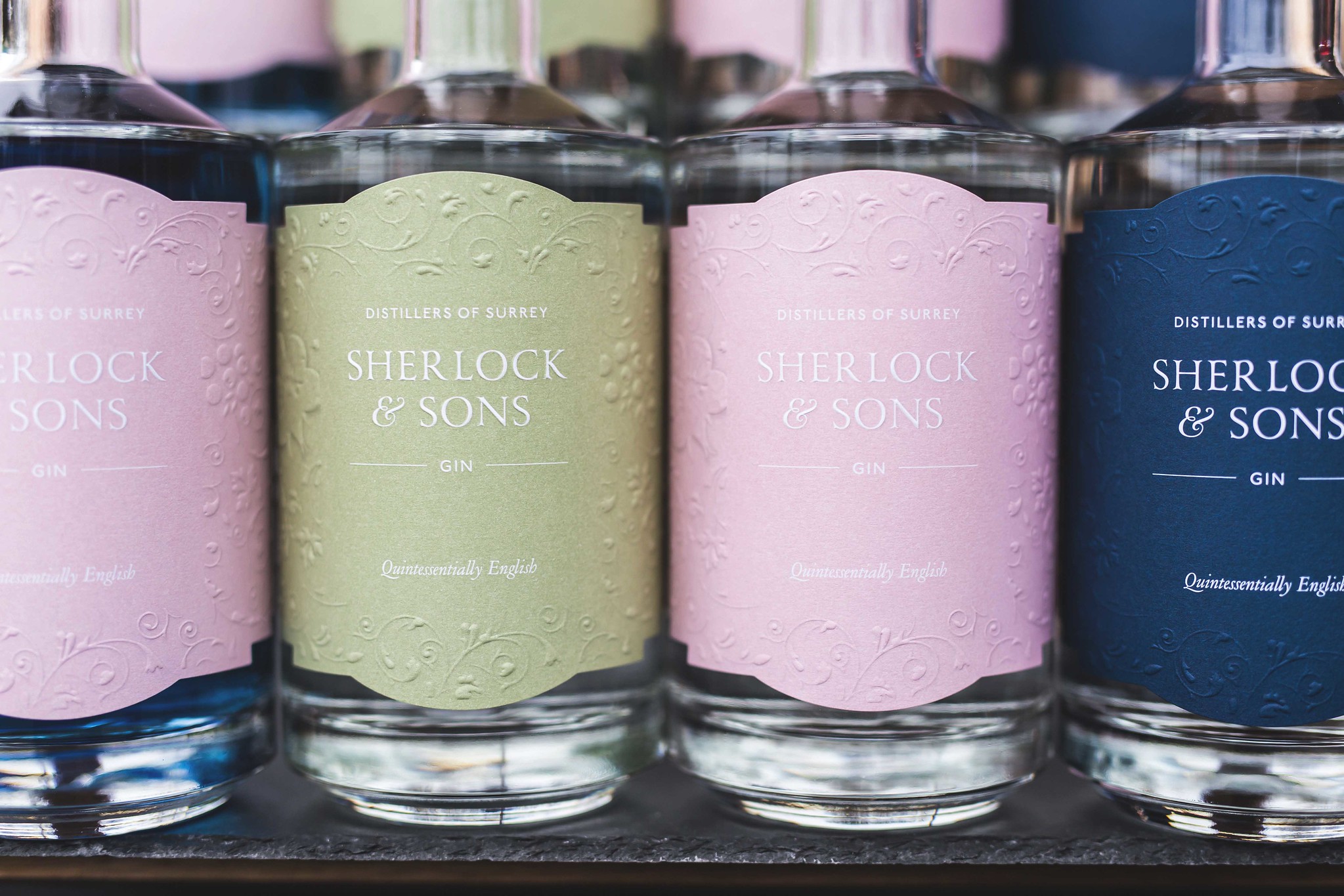
Sherlock & Sons Gin

Sherlock & Sons Gin

Nestled in the heart of Surrey, the charming village of Ripley straddles the old Portsmouth Road, formerly a principal route between London and the Royal Navy's main port. As you take a leisurely stroll across its green, pass by picturesque cottages, or pop in for a drink at one of its nautically named pubs, little would you suspect it was also home to an award-winning gin.

But it is precisely Ripley's historic connection with the Royal Navy that makes the village such a fitting location for Distillers of Surrey, the family-run business of Head Distiller Simon Sherlock and partner Lianne. In the 1700s, gin was widely believed to fight off various illnesses, and thus legislation was passed that all naval vessels had to take on board a specific quantity of this much loved spirit. To ensure the officers received gin of genuine quality, its strength was measured by soaking gunpowder - should the gunpowder fail to light, it was evidence the gin was diluted and did not meet the required 114 proof / 57% ABV, hence the term "Navy Strength" gin.

The Nautical Edition of Sherlock & Sons Gin, dressed in a navy blue label, was one of two gins that Distillers of Surrey launched with in summer of 2018. "In Ripley itself, you've got The Talbot Inn, where [Admiral] Nelson stayed," says Simon Sherlock. "You've got The Anchor, The Jovial Sailor, The Ship - all of the pubs have a nautical theme. So we had to launch a Navy Strength."

Ripley, Surrey Sherlock & Sons Gin

The other was the Solstice Edition at a less potent 42% ABV, distuinguishable by its pink label. Although initially produced as a limited batch alongside its Nautical sibling, its unexpected popularity earnt this gin a permanent place in the Sherlock & Sons repertoire. "We've got some elderflower, we've got pink grapefruit; it's light, slightly floral, really easy drinking, super smooth," describes Simon. "We set out to create all the gins as really smooth for sipping, you can drink them on the rocks."

Prior to my interview with Simon at the Ripley Farmers' Market, I had sampled the Solstice Edition over ice at Camouflage Bar in nearby West Byfleet. Understandably, drinking gin sans tonic water isn't to everyone's taste, but sometimes there are flavours one might miss after adding the traditional tonic, which I curiously discovered with this particular gin. As Simon himself explains, "There is kind of a background spice to it on its own, but there is no spice in the gin. It's confusing. The second you open it up with tonic, it just goes really smooth and you pick up more on the floral."

Sherlock & Sons Gin Ripley, Surrey Ripley, Surrey

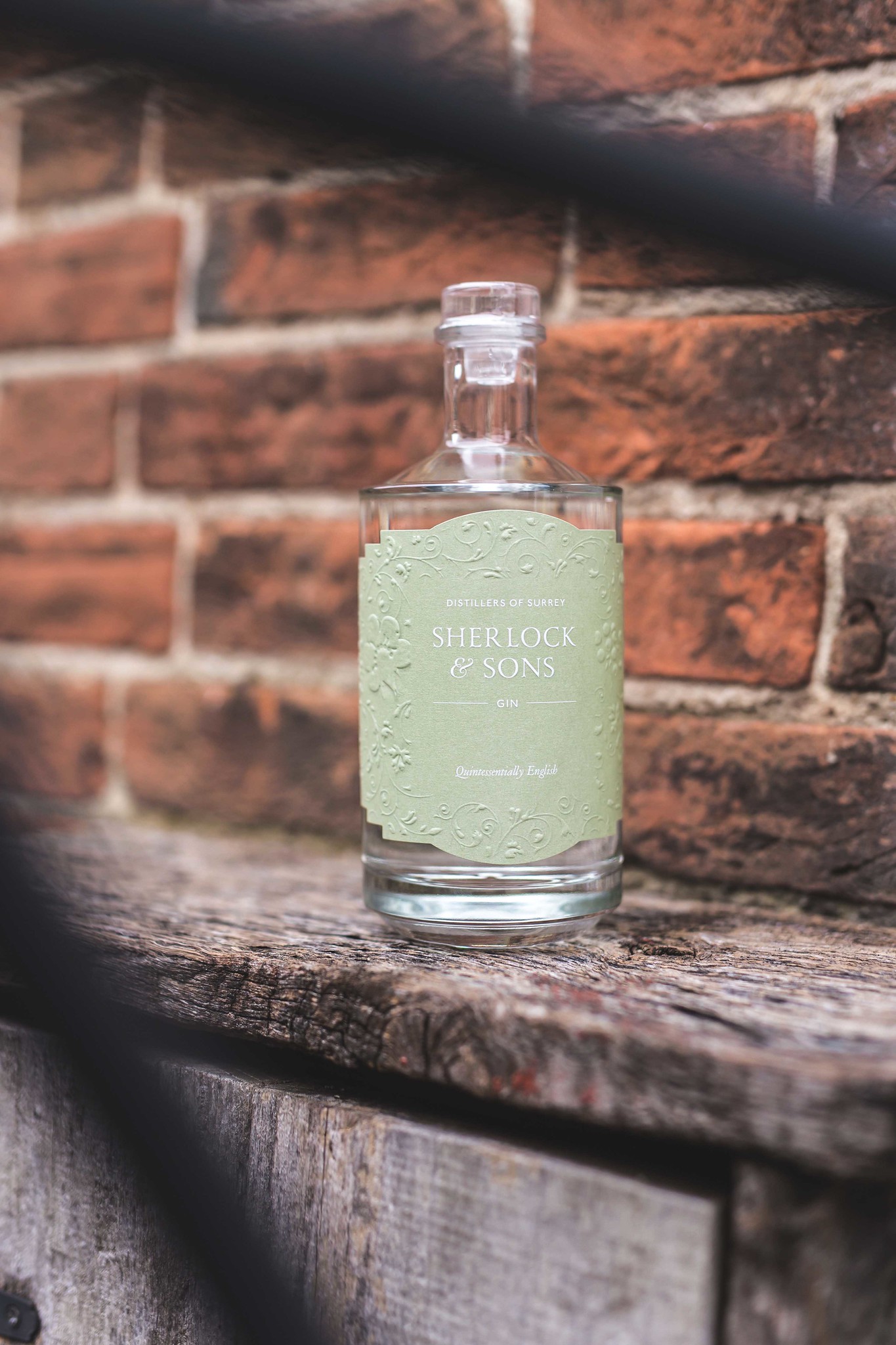
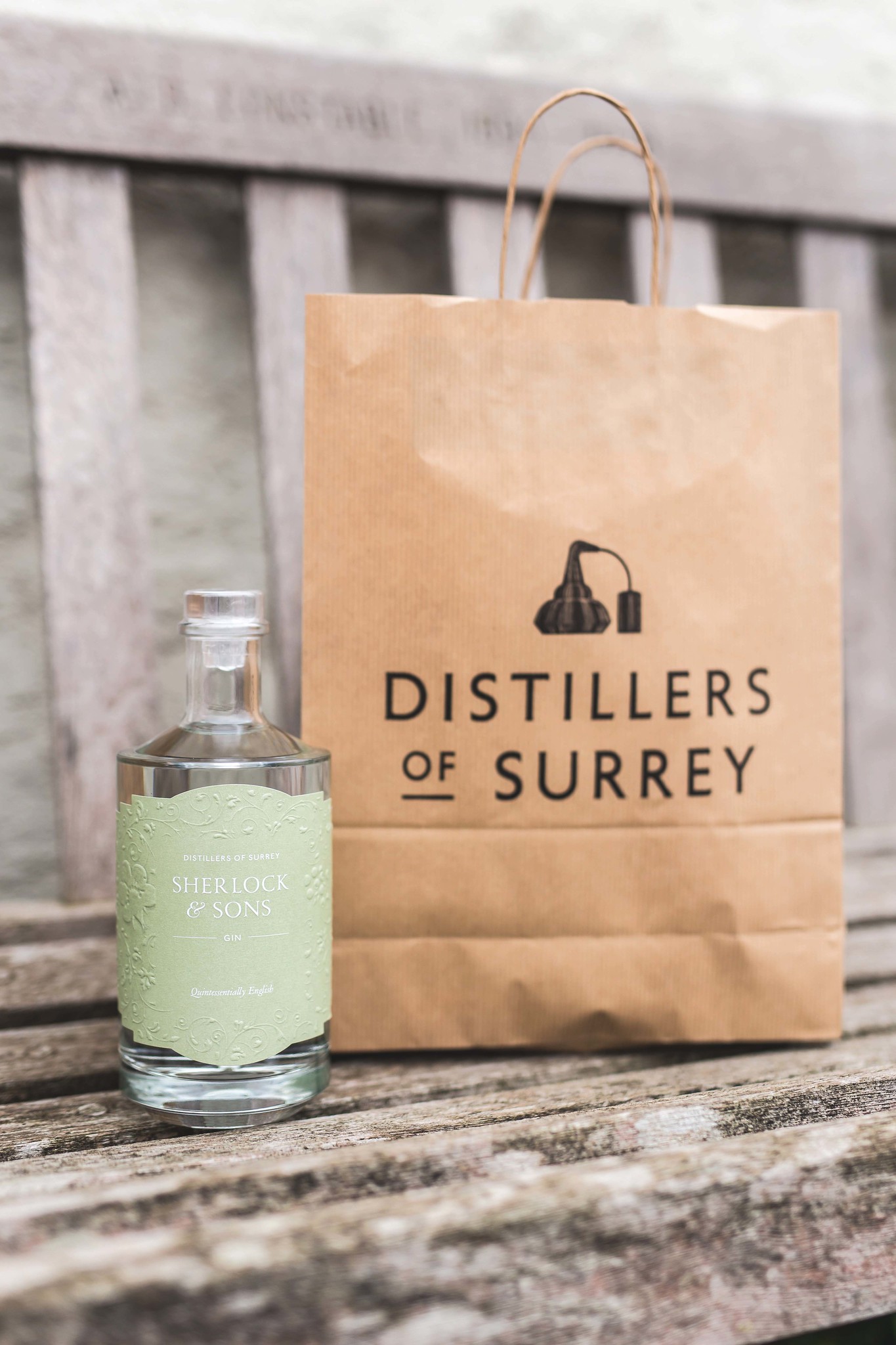
Distillers of Surrey launched 9th June 2018 on World Gin Day, but within a matter of months the company was releasing its third product, the Aromatic Edition, dressed in a sage green label that not only communicates the gin's herbal palate, but equally mirrors the numerous examples of pale green seen throughout Ripley Village. This is my personal favourite among the three Sherlock & Sons editions, its herbal botanicals bringing a fresh and distinctive flavour to a chilled gin and tonic. The World Gin Awards seem to agree, having received Gold in the London Dry Gin category.

Besides the taste, however, the best part of this gin is its conscientious approach to local ingredients, hence the brand's tagline, "Quintessentially English". Simon humorously describes the Aromatic Edition as "Brexit-proof", because none of its botanicals are sourced abroad. "Again, that's at 42% ABV," continues Simon, "but we've got in there rosemary from Priory Farm [outside Redhill], we've got bay leaf from The Clock House Restaurant in Ripley, we've got olives grown in Sussex, and we've got tea from Tregothnan in Cornwall. A real push on British ingredients."

Recently, Distillers of Surrey released a limited Valentine's Edition, a colour-changing variation of the already popular Solstice gin, dyed with butterfly peas and enjoying nuances of rose and Parma Violets. But this is the last of the company's product range for now, with sights set on building on the early success of the family business, including branded glasses and a deal with a major supermarket.

Sherlock & Sons Gin Ripley, Surrey Ripley, Surrey

But while there are hundreds of gins fighting for our lips, Simon, who was previously the Head Distiller for Silent Pool Gin, doesn't fear the competition. "There are over four hundred [gins] in the UK at the moment," he says. "Since our launch, there have been another three in Surrey. But everyone's platform is unique. Our big focus is on English ingredients, if we can. We're all about local, so we try to support local. We're based in Ripley, we're obviously at the Farmers' Market here, we're at Milford and Godalming Farmers' Markets, we just signed off to Kew Farmers' Market, and we're trying to go to as many local festivals as we can."

With plans to install a bigger still to accommodate the expanding business, the Sherlock family have much to look forward to in 2019. And although I am amazed by the level of success Distillers of Surrey have achieved in less than a year, it is very well-deserved for what I can confidently describe as a smooth and delicious product. If you fancy a sample yourself, you can find Simon or Lianne at your local Surrey farmers' market, or if my review has been enough to get your gin juices flowing, you can purchase a bottle online or at selected stockists.

Sherlock & Sons Gin

10 February 2019

Life After London: Moving Back in with my Parents

(And Other Real Life Quandaries of a Single Twenty-Something)

Life After London

It's been five months since I moved out of the Zone 2 flat I had been sharing with my friends. Although returning to live with my parents - to quote Valentina from RuPaul's Drag Race - didn't make sense with my fantasy. I had envisioned the latter half of my twenties living with a best friend or significant other, but my friends have their own lives to pursue, and there's no significant other to speak of. Moreover, the fact of the matter is I couldn't afford to rent in London by myself, mentally speaking as much as financially.

In 2017, the Office of National Statistics revealed that more than a quarter of young adults (aged 20-34) still live with their parents, due in part to the rising costs of renting or buying a home. It's clear therefore I'm not alone in my predicament, albeit that doesn't necessarily make it easier. After a period of independence, there was always going to be a certain reluctance in moving back to my childhood home.

Of course, this isn't the first time I've been met with this particular situation. Following three unforgettable years at university, my very first taste of independence, I was faced with the bleak reality that I had to come home and figure out my direction in life. Within days of returning to Woking, I felt like a teenage boy again, stripped of my freedom and bound by the rules of my parents, whose primary mission, it seemed, was to harass me into finding a full-time job. In hindsight, they only sought to ensure I didn't become lazy and complacent, but there was a discernible tension between us that I couldn't shake. At least I could take solace in my situation being only temporary, because I would soon find my dream media job and move to London.

Life After London

Except I didn't. When an internship at the Daily Express ended abruptly after just two weeks, my parents did not delight in my sudden unemployment. I was promptly ordered to work at my stepdad's architectural practice until I found myself an alternative position, which - given I had no prior experience in architecture besides building virtual houses in The Sims - served only to deepen my reliance (and resentment) for living at home. Without any immediate prospect of moving to the capital, I took up driving lessons in the hope that having a car would perhaps offer me some form of escape.

More than a year passed; my friends had migrated to London, I had a tally of unsuccessful job applications, and I was still living with my parents. Yet in an unexpected twist for all parties, I found I had come to enjoy my "temporary" appointment at Amasia Architects Ltd, and all thoughts of a future in journalism - with exception for this blog - began to drift away. Of course, this made my masterplan of leaving home for London all the more difficult, for what other reason did I have to abandon my cushy set-up besides seeing my friends?

It turned out they were enough. When Maddy and Georgia invited me to join them in a new flatshare, it took me all of two minutes to say yes. We brought Lizzie into the fold, and there we were, an awesome foursome living in South London. At long last, I was living in London with my best friends, reclaiming my social life, and relishing my independence. (Even if said independence cost myself £700 per month in rent, plus bills.)

Life After London

Fast forward three and a half years to the present day, and I have no regrets about my London life. However, where mine greatly differed to my friends' - and that of nearly everybody who moves into the capital - is I held onto a career outside London, and therefore was committed to enduring an hour-long drive at silly o'clock each morning to avoid the worst of the outgoing traffic. Suffice it to say the daily commute took its toll on me, which made the decision to return to Surrey somewhat easier to bear.

Nevertheless, I was reluctant to move back in with my parents. If anything, I would have preferred to rent or buy my own place, thereby maintaining my sense of independence. But while my savings were substantial, the tough reality was I couldn't afford to live somewhere by myself. A modest one-bedroom flat in Woking or Guildford costs £100-£200 more per month than I was paying for a share of a four-bedroom flat in Kennington, and would have cancelled out any savings I might have made on fuel and everyday living costs. And it's a widely accepted truth that a mortgage is difficult to apply for without the benefit of a second salary.

So I swallowed my pride and moved back in with my parents, who were surprisingly very encouraging about the whole affair. All they asked for in return was £200 in monthly rent (a bargain by any standards), to assist with the housework and cooking (which I'd have happily done anyway), and to look after the cats whenever they went on holiday (a task which I was already accustomed to performing). In fact, it was while looking after the cats for a fortnight last year that I finally appreciated how stress-free my life would be if I came back to Surrey on a more permanent basis.

Life After London

As with any move, it took a few weeks to settle in and realise that living out of boxes isn't the most convenient way to live, not helped in this instance by the astonishing amount of junk I had been hoarding in my bedroom, virtually untouched while I resided in London. Not that my parents or any house guests would have noticed during my three-year absence, as it was all roughly hidden away in the wardrobe and within the concealed storage compartment beneath my bed. As an emphatically organised individual, I was dismayed by the apparent disregard exhibited by post-uni Joe, something I conceded must have been evident in other aspects of my behaviour (hence the aforementioned tension).

It took me the best part of September to sort through all my belongings; donating unwanted clothes and knick-knacks to charity, shredding piles of bank statements, and cringing at soppy love letters from my first girlfriend. The process was hugely therapeutic, not only providing much needed space for my current possessions, but also removing traces of a past self with whom I no longer connected. I did keep the love letters, though, as a reminder that - while my first relationship ended in disaster and guilt - I was very much loved even as a socially awkward teenager, and I hope I can one day show someone just as much devotion as was undeservedly given to me.

Life After London

And as have my attitudes to romantic relations changed, so has my relationship with my mum and stepdad. As much as post-uni Joe would have liked to have thought he was a mature and responsible adult, it's clear now he wasn't. Three years away have done me a world of good, and it shows in how much respect my parents now show me, and in turn how much respect I show them. In the past five months, we haven't had a single argument, compared to the numerous, avoidable confrontations we had following my return from university.

In likeness to that time, however, I do on occasion still feel like a child, albeit more so in the sense that living in the family home reminds me I am my parents' child, and that I am dependent on them for my temporary living arrangement. Which, understandably, compels me sometimes to ask for permission whenever I make plans for myself. My mum then helpfully reminds me I'm my own person and that I don't require their consent. All I ever really need to let her know is when I will and won't be home for dinner, and if I'm doing my own food shopping when it's my turn to cook. My parents are even repurposing the garage conversion into a private a space for me to escape, blog, and watch my choice of television series in peace.

In short, life feels as normal as it can be. I have a regular working day, I sleep well, I have a healthy relationship with my parents, my stress levels have never been lower, and let's not forget about the 24-hour access to cats. It's true also to say that moving back in with my parents isn't the course I had planned on taking, but I'm very much content, and isn't that what matters most? To top it all off, I'm saving more money than I would have ever done had I stayed in London, which means I'll have the funds to buy somewhere for myself in the next two years. While my mum has said she loves having me back, let's not get too comfortable.

Life After London

23 January 2019

Ginuary | The Surrey Edition

Surrey Gins

While much of the Western World is participating in Veganuary, Dry January, and all manner of temporary diets, I prescribe to the much more appealing Ginuary - which I confess isn't much else than exploiting a play on words as a tenuous excuse to drink more gin. Prior to moving out of my London flat, I had the burdensome task of finishing my near-empty bottles (of which there were many), and I have since been on a mission to replenish my collection and find new favourites.

For Ginuary 2019, I thought to look locally, seeking out producers of gin in my home county of Surrey. You may be familiar already with Silent Pool Distillers, whose elegantly bottled gin remains one of the best I have tasted, yet the past two years have seen the launch of some delicious newcomers, such as Sandhills, Thundry Hills and Sherlock & Sons, created by enterprising individuals less than half an hour's drive from home.

Surrey Hills

Let's begin with Sherlock & Sons, produced in the village of Ripley by Distillers of Surrey, a family-run business led by Head Distiller Simon Sherlock. Although less than a year old, there are four editions of Sherlock & Sons currently on offer, comprising Solstice, Nautical, Aromatic (pictured), and limited colour-changing Valentine's Editions. The featured Aromatic Edition is especially unique in that all twelve botanicals are sourced from the UK - "Brexit-proof", as Simon described in our interview the other weekend.

Sherlock & Sons Gin

We then turn to Thundry Hills Gin by Elstead Village Distillers, produced on Thundry Farm in the village of Elstead. Founded in 2017 with its Original and Sanctuary releases, they have since welcomed the delightfully fruity PM Gin (pear and mango), and a seasonal Michaelmas Gin. The distillery has been shut for much of January while it undergoes refurbishment and expansion, but production of these Surrey Hills spirits is expected to resume very soon.

Thundry Hills Gin

Finally, we move onto the youngest and perhaps boldest gin, produced by Sandhills Distillery in the village of - you guessed it - Sandhills. While the bright yellow bottle glows unabashedly from the back bar, the innovative and combined distillation method of copper pot and cold vacuum brings out a beautifully spicy, citrus-led flavour to Sandhills Gin that is somehow delicate yet distinctive. Although having only launched in autumn of last year, I'm anticipating a very successful 2019 for these modern-thinking distillers.

Sandhills Gin

If pretty pictures in the Surrey countryside aren't enough to tempt your curiosity, you can read more about these local gins in the coming weeks - including their history, tasting notes, and interviews with the distillers

© Joseph Kent / www.unlimitedbyjk.com

All photographs are subject to copyright law, and must not be reproduced without express permission.

Search content: